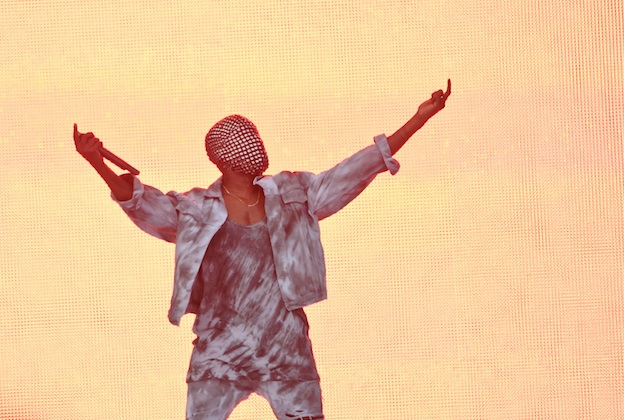
Kanye West's Wireless Festival Appearance: A Deep Dive into Racism, Fashion, and Global Ambition
Kanye West, now known as Ye, has consistently been a figure who commands attention, provokes debate, and challenges norms. His return to London's renowned Wireless Festival was no exception, becoming a focal point of discussion long before he even stepped on stage. Beyond the musical spectacle, his appearance at Finsbury Park in July sparked widespread conversation, particularly following a powerful, unscripted monologue during his set. This speech delved deep into his frustrations with racial discrimination in the fashion industry, the complexities of celebrity, and his unwavering commitment to reshaping the world.
The Controversial Return to Wireless Festival
Ye's announcement as a headliner for all three nights of the Wireless Festival – from July 10 to 12 – marked his first major UK performance in nearly a decade, his last being Glastonbury in 2015. This highly anticipated comeback was met with a storm of controversy. His past antisemitic comments, which he later publicly apologized for, had made him a polarizing figure globally. The news of his performance immediately drew strong reactions from various corners, including London Mayor Sadiq Khan, whose spokesperson stated to *Rolling Stone*, "We are clear that the past comments and actions of this artist are offensive and wrong, and are simply not reflective of London’s values. This was a decision taken by the festival organizers and not one that City Hall is involved in." Similarly, the Jewish Leadership Council described the announcement as "deeply irresponsible."
Despite the uproar, festival organizers remained resolute, hailing "Ye’s UK comeback [as] an extraordinary chapter in Wireless’s story." His return coincided with the release of his twelfth studio album, *Bully*, his first LP in four years, which added another layer of anticipation for fans eager to hear new material alongside his iconic records. For a more detailed look into the events leading up to his performance, explore
Ye's Wireless Return: Controversy, Apologies, and London's Uproar and
Wireless Festival: Ye's Controversial UK Return After a Decade.
Unfiltered Voice: Kanye's 15-Minute Monologue on Racism and Fashion
It was during his July 4th performance at Wireless that Ye delivered what many described as a classic Kanye moment: a lengthy, unscripted monologue. Spontaneously emerging from a freestyle during his hit "Runaway," the nearly 15-minute speech traversed a wide range of topics, including the media's portrayal of him, the pressures of celebrity, and crucially, his experiences within the cutthroat fashion industry.
Calling Out Discrimination in Fashion
A significant portion of Ye's speech centered on what he perceived as systemic discrimination within high-fashion circles. He implied that his race or celebrity status often led to him being undervalued or dismissed in crucial meetings with major fashion houses. "When I take these meetings and s***, people talk to you like you’re stupid or something," he asserted, deliberately refraining from naming specific brands like Nike, Louis Vuitton, or the Gucci group, yet making his frustrations clear.
His core grievance revolved around the hypocrisy he observed: the industry's willingness to tap into Black creativity for specific projects, only to then restrict those creators from achieving true autonomy or leadership. He eloquently captured this sentiment, stating, "Don't discriminate against me because I'm a black man or because I'm a celebrity and tell me that I can create, but not feel." He pointed to successful collaborations, such as Pharrell Williams' popular eyeglasses or his own groundbreaking sneaker designs, as evidence of the immense demand for Black artistic contributions. Yet, he then mimicked the industry's perceived pushback: "And they say, 'No no no n****r. Not no more. That’s too much. That’s too much. No no no no no no n**** not no more. That’s way too much. That’s way too much. Stay in your place.'" This powerfully illustrated the racial and hierarchical barriers he felt Black creatives faced, often relegated to specific roles rather than being given full creative reign. He condemned the industry's implicit message: "Do what you get paid to do. Stay in your place. Don’t embarrass yourself trying to chase your dreams. Save face. Save face."
Beyond the Mic: The Larger Conversation on Creative Freedom & Representation
Ye's Wireless Festival speech, while delivered in his typically provocative style, tapped into a much broader, critical conversation about diversity, equity, and inclusion within creative industries, particularly fashion. His accusations of being told to "stay in your place" resonate with countless individuals from underrepresented backgrounds who have faced similar limitations, often experiencing a ceiling on their ambition and autonomy despite their talent.
Understanding the Dynamics:
*
Tokenism vs. True Empowerment: Ye's experience highlights the difference between an industry engaging in tokenism – using a diverse face for a specific, often limited, project – and genuinely empowering diverse individuals to hold positions of power and creative control. True representation means Black designers, executives, and decision-makers are at every level, not just as collaborators on special collections.
*
The "Celebrity" Paradox: While celebrity status can open doors, it can also create its own form of discrimination, where an artist's vision is reduced to their fame rather than respected for its intrinsic merit. For Black celebrities, this often intersects with racial bias, complicating their journey.
*
Industry Gatekeepers: Fashion, like many traditional industries, has long been dominated by a select few, often resistant to change and new perspectives. Challenging these gatekeepers, as Ye did, is essential for fostering a more inclusive and innovative environment.
Practical Insights for Aspiring Creatives & Consumers:
1.
Demand Transparency: As consumers, research brands and support those that genuinely commit to diversity, not just in their campaigns but in their boardrooms and design teams. Look for data on representation and leadership.
2.
Advocate for Autonomy: For emerging designers and artists, seek opportunities that offer true creative control and fair ownership of intellectual property. Understand the terms of your collaborations.
3.
Build Your Own Platforms: In an era of digital accessibility, creators don't always need to wait for established industries to validate them. Utilizing social media, e-commerce, and independent production can be powerful tools for bypassing traditional gatekeepers.
4.
Educate Yourself: Understand the history of appropriation and discrimination in your chosen industry. Knowledge is power when advocating for change.
5.
Support Diverse Talent: Actively seek out and support products, art, and services from creators of color. Your purchasing power can drive significant change.
While Ye's personal controversies often complicate his public messaging, the issues he raises about discrimination are very real and deserve earnest attention. His platform, regardless of how contentious, allows these critical discussions to reach a global audience, prompting reflection on how industries can evolve to be truly equitable.
A Vision for World Change: Kanye's Optimistic Outlook
Despite the heavy subject matter, Ye concluded his Wireless Festival speech on a remarkably optimistic and forward-looking note. He articulated a clear, albeit ambitious, desire for his future and that of his peers: "I just want to be awesome, and I want to hang around my awesome friends and change the f***ing world, and that’s exactly what I plan to do."
This statement encapsulates a recurring theme throughout Ye's multifaceted career. From revolutionizing sneaker culture with Yeezy to venturing into architecture, technology, and political discourse, his ambition has consistently extended beyond music. He envisions himself not just as an artist or a designer, but as a catalyst for global transformation. This desire for "world change" speaks to a fundamental belief in innovation, disruption, and the power of creative thinking to solve societal problems and improve human experience. While his methods and pronouncements often ignite fierce debate, his aspiration to build a better future, surrounded by like-minded individuals, remains a driving force. It’s a bold declaration that, for better or worse, continues to define the enigmatic persona of Kanye West.
Conclusion
Kanye West's headlining appearance at Wireless Festival was undeniably a momentous event, characterized by both electrifying performances and significant controversy. Beyond the music, his unscripted speech about the racial and celebrity-based discrimination he experienced in the fashion industry resonated deeply, sparking important conversations about creative freedom and representation. While Ye's public persona remains complex and often polarizing, his willingness to use such a prominent stage to vocalize these systemic frustrations provides a potent reminder of the ongoing challenges faced by many in creative fields. His ultimate declaration of wanting to "change the f***ing world" encapsulates the ambitious spirit that continues to define his career, ensuring that even amidst the uproar, Kanye West remains an undeniable force for both creativity and conversation.